 ultimate-guide
Tree Trimming Near Me: Professional Care Guide
Table of Contents
- Why Professional Tree Trimming Near You Matters
- When to Prune Trees: Seasonal and Health Indicators
- Tree Health Assessment: What Arborists Look For
- Finding and Choosing a Qualified Local Arborist
- Frequently Asked Questions
Last Updated: September 20, 2026
Why Professional Tree Trimming Near You Matters
Professional tree trimming near me is more than aesthetics, it's about safety, tree health, and property protection. When trees grow unchecked, they develop structural weaknesses, attract disease, and pose genuine hazards to your home, vehicles, and power lines. A qualified arborist assesses each tree individually, identifying which branches need removal and which should stay to maintain the tree's structural integrity.
Delayed trimming can turn a simple maintenance job into an emergency removal. Overgrown branches become hazard zones during storms. Dead wood falls unpredictably. Trees competing for space weaken each other. Professional assessment catches these problems before they escalate.
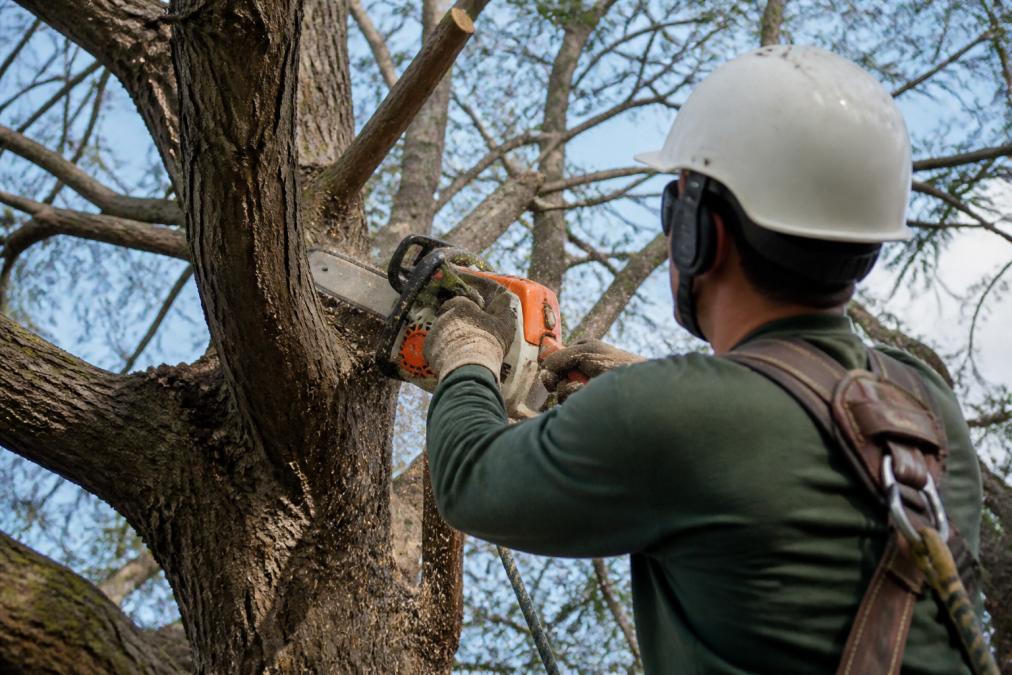
The difference between a homeowner with a chainsaw and a qualified arborist comes down to understanding tree biology. We don't just cut, we prune strategically to encourage healthy growth patterns, improve canopy structure, and reduce disease risk. This systematic approach aims to ensure trees stay healthy.
When to Prune Trees: Seasonal and Health Indicators
Timing matters more than most people realise. Late winter to early spring is ideal for most deciduous trees, they're dormant, wounds close quickly, and you can see the branch structure clearly. However, the best time depends entirely on the tree species and its current health status.
Spring-flowering trees like magnolias and cherry trees need pruning right after flowering ends. Summer is generally poor timing because trees are stressed by heat. Autumn pruning can stimulate new growth that won't harden before winter frost. Conifers and evergreens tolerate pruning year-round, though late winter remains optimal.
Watch for these health indicators that signal pruning is urgent:
- Dead branches that don't leaf out in spring
- Branches crossing or rubbing against each other
- Limbs growing inward toward the trunk
- Visible damage from storms, disease, or wildlife
- Branches hanging over structures or power lines
- Signs of pest infestation (bark damage, unusual holes, sawdust)
A qualified arborist recognises disease signs invisible to untrained eyes. Cankers, discoloured bark, oozing sap, and unusual fungal growth all demand immediate attention. Delaying treatment spreads disease through the tree and into surrounding trees.
Tree Health Assessment: What Arborists Look For
A professional tree health assessment examines multiple factors that determine whether a tree thrives or declines. This isn't guesswork, it's systematic evaluation based on decades of arboricultural science.
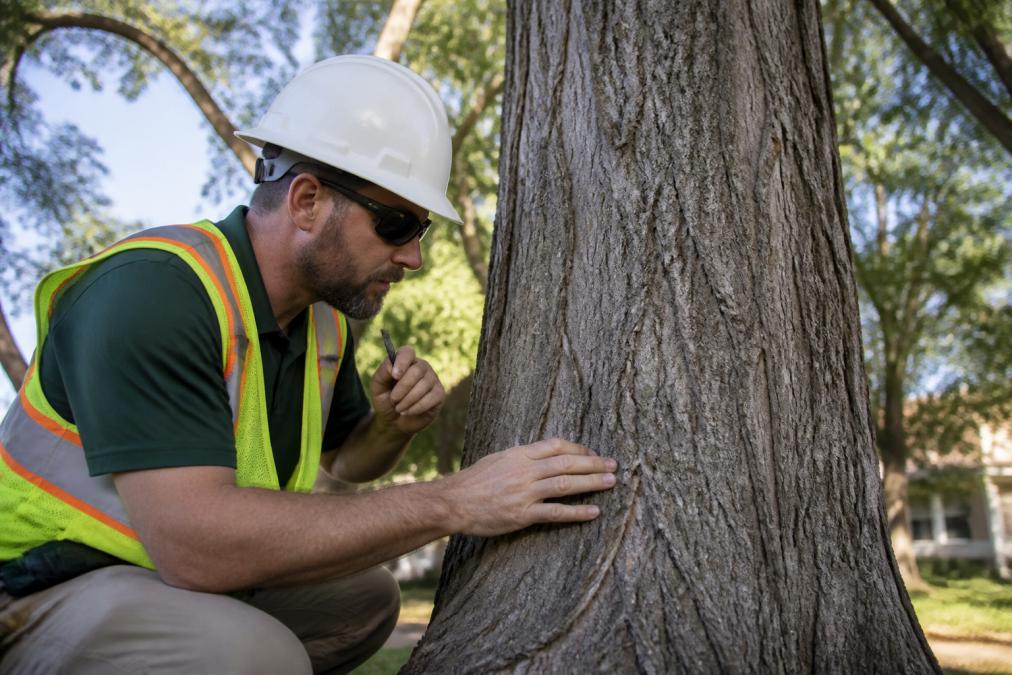
Arborists evaluate trunk condition first. A healthy trunk is straight, solid, and free of deep cracks or cavities. Lean or significant lean combined with weak branch attachment signals structural failure risk. Bark should be intact, peeling or missing bark exposes the tree to disease and pest entry.
Branch attachment matters enormously. Branches that join the trunk at narrow angles (less than 45 degrees) are prone to splitting under load. Branches with included bark, where bark has grown between the branch and trunk, won't support heavy weight. Professional assessment identifies which branches need removal to prevent failure.
Crown density and shape tell the story of the tree's health and history. A dense, balanced canopy indicates vigour. Sparse foliage, dead branches concentrated on one side, or excessive thinning suggests stress. Trees stressed by drought, compacted soil, or disease show these patterns clearly.
Chop it tree services evaluates root zone health too. Soil compaction, poor drainage, and root damage from construction all weaken trees. We assess whether the tree has adequate space to grow and whether competing vegetation is stealing resources.
DIY vs Professional Tree Trimming: What You Need to Know
The temptation to trim trees yourself is understandable, but the risks are substantial and often invisible until something goes wrong. Understanding the real trade-offs helps you make an informed decision.
The Hidden Costs of DIY Trimming
- Improper cuts that don't heal. Homeowners often cut too close to the trunk or leave stubs. These wounds don't compartmentalise properly, leaving the tree vulnerable to disease and pest entry. A tree weakened by poor cuts may decline over years, eventually requiring removal at significant cost.
- Structural damage from removing the wrong branches. Removing branches that provide structural support can cause the tree to lean, split, or fail during storms. This damage is often irreversible.
- Damage to power lines or property. A branch that falls unexpectedly can damage roofs, vehicles, or worse, contact power lines. Your home insurance typically excludes damage caused by DIY tree work, leaving you liable for repairs.
- Personal injury. Falls from height, chainsaw injuries, and branch strikes cause serious injuries every year. Even experienced climbers use safety gear; one mistake at height is often fatal.
Why Professional Assessment Matters First
- Hidden decay. A branch that looks solid may have internal rot. When you cut it or it falls, the decay spreads or the branch fails unexpectedly.
- Structural weaknesses. Branches with narrow attachment angles, included bark, or previous damage are prone to splitting under load. Removing the wrong branch can destabilise the entire crown.
- Disease or pest presence. Cankers, fungal growth, and pest damage indicate the tree's health status. Improper pruning can spread disease to other branches or neighbouring trees.
- Root zone stress. A tree stressed by compacted soil, poor drainage, or root damage may not recover from aggressive pruning. What looks like a healthy tree might be struggling.
When DIY Is Reasonable
- Removing small dead branches (less than 5 cm diameter) that you can reach without climbing
- Light tidying of low foliage that doesn't require cutting near the trunk
- Clearing minor debris from gutters or pathways
- Removing branches that have already fallen
When Professional Expertise Is Essential
Hire a qualified arborist for:
- Any work requiring climbing or working at height
- Branches larger than 5 cm diameter
- Branches over structures, power lines, or pedestrian areas
- Trees showing signs of disease, pest damage, or structural weakness
- Removal of dead trees or large limbs
- Stump grinding
- Work near power lines (this requires council notification and specialist clearance procedures)
- Any situation where you're uncertain about safety
DIY trimming works for: removing small dead branches within reach, light tidying of low foliage, clearing minor debris.
Finding and Choosing a Qualified Local Arborist
Choosing the right arborist protects your property and ensures quality work. Several factors distinguish legitimate professionals from operators cutting corners.
Frequently Asked Questions
What is the best time of year for tree trimming?
Timing depends on tree species and climate. Generally, late winter to early spring (before new growth) is ideal for most deciduous trees. Evergreens tolerate pruning year-round but benefit from work in late summer. Avoid heavy pruning during autumn when trees are preparing for dormancy. A qualified arborist will assess your specific trees and recommend the optimal timing for your property.
How can I tell if a tree needs professional pruning?
Look for dead or diseased branches, crossing limbs that rub together, branches growing inward toward the trunk, or limbs extending over structures like your home or pool. Trees with dense canopies that block light, or those showing signs of pest damage or disease, also benefit from professional tree health assessment. If branches hang over power lines or create safety hazards, professional attention is essential.
What are the safety regulations for trimming trees near power lines?
Work near power lines must comply with electrical safety standards set by the relevant regulator. Only qualified, licensed arborists trained in high-voltage awareness should work near power infrastructure. Attempting DIY trimming near power lines risks electrocution and property damage—always engage a fully insured professional for this work.
What is the difference between tree lopping and professional arboriculture?
Tree lopping removes large branches indiscriminately, often leaving stubs that damage tree health and structure. Professional arboriculture uses proper pruning techniques—cutting at branch collars, maintaining canopy shape, and promoting long-term tree vigour. Qualified arborists follow established standards to ensure trees recover well and remain healthy. Lopping may be cheaper short-term but often costs more in future damage and tree decline.
Professional tree trimming near me keeps your property safe, your trees healthy, and your landscape beautiful. Regular assessment prevents emergencies and catches problems early. Whether you need routine maintenance, hazard reduction, or urgent storm damage response, a qualified arborist delivers precision and care your trees deserve. Get a free quote from Chop it tree services today and discover how professional tree care transforms your property.