
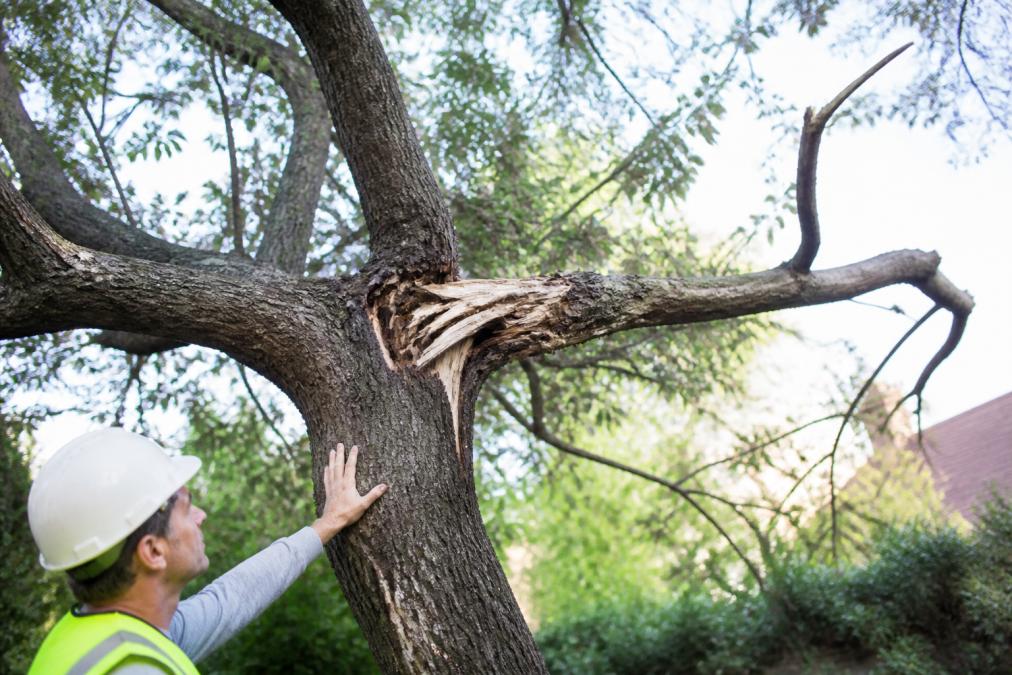
 how-to
How to Identify Hazardous Tree Branches in 2026
Table of Contents
- Why Hazardous Tree Branches Fail Without Warning
- Signs of a Dying Tree: What to Look For First
- How to Identify Hazardous Tree Branches: A Step-by-Step Inspection
- Tree Pruning Safety Standards Every Homeowner Should Know
- Arborist Risk Assessment: When DIY Stops and Professional Help Starts
- Seasonal Checks and Your Hazard Documentation Checklist
- Frequently Asked Questions
Last Updated: September 21, 2026
Why Hazardous Tree Branches Fail Without Warning
A tree limb can look solid right up until it lands on your roof. At Chop it tree services, we see homeowners who walked under the same tree for years, then found half of it across the driveway after a storm. Learning how to identify hazardous tree branches is the difference between a scheduled prune and an insurance claim.
Three things decide whether a branch is genuinely dangerous:
- The defect itself (cracks, decay, deadwood)
- The size of the limb and how far it would fall.
- What sits underneath it, which arborists call the target zone
Signs of a Dying Tree: What to Look For First
Watch for these early signals:
- Canopy thinning: the crown looks sparse compared with neighbouring trees
- Leaf chlorosis: leaves turn pale yellow or brown out of season
- Brittle twigs: small branches snap instead of bending
- Deadwood: bare limbs with no buds, often darker than the rest
- Epicormic growth: dense shoots sprouting low on the trunk, a stress response
Fungal growth is the other big clue: mushrooms or shelf-like brackets on the trunk mean decay is active inside, and they only appear once rot is established.
How to Identify Hazardous Tree Branches: A Step-by-Step Inspection
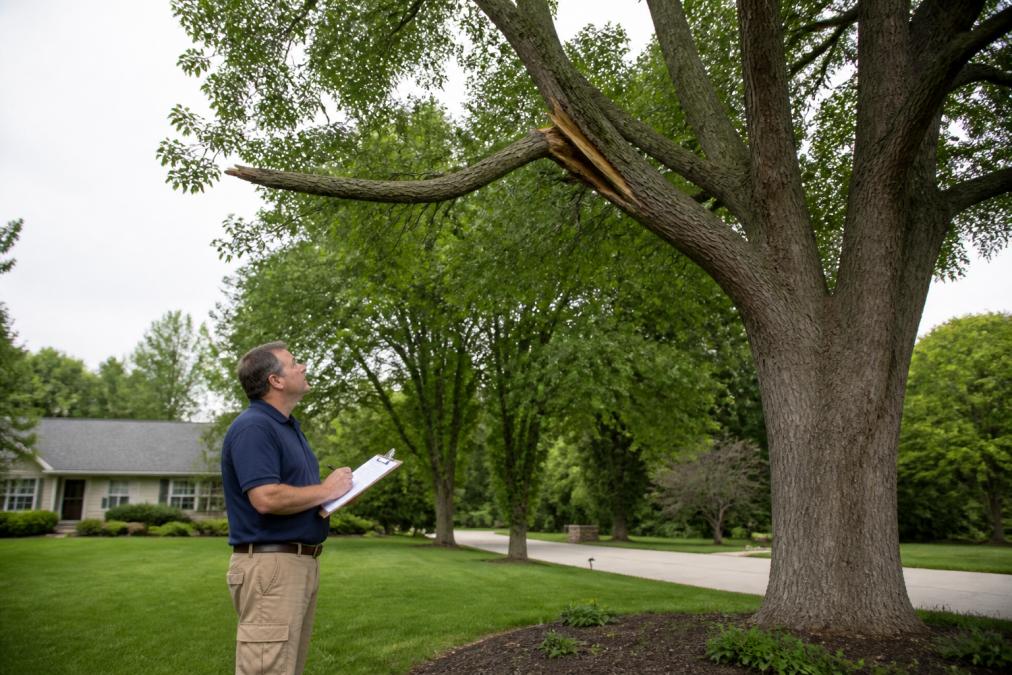
You can run a basic safety inspection yourself in about 15 minutes per tree. Work from the ground, never climb, and use binoculars for anything above head height.
Step 1: Check for Deadwood and Hanger Branches
A hanger branch is a broken limb caught in the canopy, held up only by other branches. These are the most dangerous defect on any tree because they can drop at any moment.
Look for:
- Limbs hanging at an odd angle, not matching the tree's shape
- Branches with no bark, or bark peeling away
- Wood that looks darker or greyer than the rest
- Snapped stubs where a limb has already partly failed
Step 2: Inspect Trunk Cracks, Cavities and Fungal Growth
Vertical cracks along a trunk or major limb are a red flag. They often signal bark inclusion, where two stems grew together and trapped bark between them, a joint that never fuses properly and a common failure point on codominant stems.
Check for:
- Vertical cracks longer than a hand span
- Cavities or hollows in the trunk
- Fungal fruiting bodies at the base or on the bark
- Soft, spongy, or crumbling wood
- Sawdust-like material around holes, a sign of borers
Step 3: Assess Tree Lean, Root Plate and Soil Movement
A leaning tree is only a problem when the lean is new. Trees that grew at an angle over decades have compensated structurally; one that started leaning last month has not.
- Root heave: soil lifting or cracking on one side of the trunk
- A visible gap between the trunk flare and the ground
- Mushrooms growing in a ring around the base
- Exposed roots that have snapped or lifted
Tree Pruning Safety Standards Every Homeowner Should Know
Australian tree pruning safety standards exist because pruning is one of the most dangerous jobs in the country. The main reference is AS 4373-2007 Pruning of amenity trees, which sets out how cuts should be made to protect tree health. Safe Work Australia also publishes guidance on tree work, and most state work health and safety regulators treat tree pruning as high-risk work when it involves heights above two metres, chainsaws, or powerline proximity.
The DIY Versus Professional Threshold
Not every branch needs a professional. The threshold comes down to height, proximity to infrastructure, and limb size relative to your equipment.
- The branch is below two metres and you can reach it from the ground with a pole pruner or handsaw
- The branch is less than 50 mm in diameter
- It is not within falling distance of powerlines, buildings, or vehicles
- You have a clear drop zone and a second person to spot
- The tree is not showing signs of structural defect at the trunk or root plate
- The branch is above two metres and requires a ladder or climbing
- The limb is larger than 50 mm in diameter or heavier than you can control with one hand
- The branch overhangs a roof, driveway, shed, or powerline
- The tree has a cavity, vertical crack, fungal bracket, or fresh lean
- You would need a chainsaw above shoulder height
- The work requires rigging to lower pieces safely
Species-Specific Hazard Profiles
Different trees fail differently. Brittle-wooded species can drop limbs without obvious external defects, while shallow-rooted species are more prone to whole-tree failure in saturated soil.
Species | Wood strength | Root habit | Common failure mode | Key warning sign |
|---|---|---|---|---|
Eucalyptus (gum) | Brittle, prone to sudden limb drop | Variable, often shallow on clay | Dropped limbs, especially in hot weather | Deadwood high in canopy, kino bleeding |
Angophora (apple gum) | Moderately brittle | Shallow, wide-spreading | Limb failure, root plate movement | Cracks at branch unions, fungal brackets |
Melaleuca (paperbark) | Moderate | Shallow, tolerant of wet soil | Whole-tree lean after saturation | Soil heaving, exposed roots |
Callistemon (bottlebrush) | Flexible, rarely fails structurally | Shallow | Usually minor limb dieback | Deadwood, epicormic growth |
Acacia (wattle) | Brittle, short-lived | Shallow | Sudden trunk or limb snap | Borer holes, fungal decay at base |
Pinus (pine) | Moderate | Deep taproot when mature | Limb failure in wind | Deadwood, resin bleeding |
Quercus (oak) | Strong | Deep | Rarely fails unless decayed | Cavities, fungal brackets |
Safety around the work matters too:
- Never use a chainsaw above shoulder height on a ladder
- Keep a clear drop zone below any cutting
- Check for powerlines before you touch anything
- Wear a helmet, eye protection, and cut-resistant legwear
- Never work alone on a tree above two metres
Arborist Risk Assessment: When DIY Stops and Professional Help Starts
An arborist risk assessment is a structured evaluation of a tree's defects, its likelihood of failure, and what it would hit if it fell, the point where looking becomes measuring.
- A cavity or hollow larger than a dinner plate
- Vertical cracks in the trunk or a major limb
- A fresh lean, or soil heaving at the base
- Fungal brackets on the trunk
- Any defect over a structure, driveway, or walkway
- A tree within falling distance of powerlines
Seasonal Checks and Your Hazard Documentation Checklist
Hazard spotting changes with the seasons. Most tree failures happen in the warmer months, but defects build up over winter, so a seasonal approach catches problems before they become emergencies.
Seasonal Hazard Calendar
Autumn is the best time to spot structural problems. Falling leaves expose the branch framework, so cracks, deadwood, and weak forks become visible, and fungal brackets that fruited after summer rain are easy to see.
Species-Specific Seasonal Risks
Season | High-risk species | What to watch |
|---|---|---|
Autumn | Eucalyptus, Angophora | Deadwood visible after leaf drop; fungal brackets |
Winter | Melaleuca, Acacia | Root plate movement in saturated soil; storm damage |
Spring | All species | Late leaf-out, epicormic growth, new cracks |
Summer | Eucalyptus, Acacia | Sudden limb drop in heat; borer activity |
Printable Hazard Inspection Checklist
Use this checklist and keep it with your photos. Print a copy for each tree or property walk.
Tree details
- Tree species (if known)
- Location on property
- Approximate height
- Date of inspection
Canopy
- Canopy thinning compared with neighbouring trees
- Leaf chlorosis or out-of-season colour change
- Deadwood or bare limbs
- Hanger branches (broken limbs caught in canopy)
- Epicormic growth low on trunk
Trunk and major limbs
- Vertical cracks longer than a hand span
- Cavities or hollows
- Fungal fruiting bodies (mushrooms, brackets)
- Soft, spongy, or crumbling wood
- Sawdust-like material around holes (borers)
- Bark inclusion or codominant stems
Base and root plate
- Fresh lean or change in lean
- Soil heaving or cracking on one side
- Gap between trunk flare and ground
- Mushrooms in a ring around the base
- Exposed or snapped roots
Target zone
- What is underneath the suspect limb? (structure, driveway, walkway, powerline)
- How far would the limb Australian terminology, eg autumn,?
- Is the target occupied regularly?
Actions
- Photograph anything that concerns you
- Note date and weather conditions
- Re-check after every major storm
- Book an arborist assessment if any defect is over a target
Frequently Asked Questions
How can you tell if a tree branch is dead or dying?
Look for brittle twigs that snap cleanly instead of bending, and check for leaf chlorosis where foliage yellows or thins out of season. Deadwood often has peeling bark and no visible buds. A simple scratch test on a small twig can help: green, moist tissue underneath means it is still alive, while brown, dry tissue indicates deadwood. Hanger branches, which are broken limbs caught in the canopy, are especially dangerous and should be assessed by a professional.
What are the common signs of structural instability in tree limbs?
Watch for vertical cracks in the trunk, bark inclusion where two stems meet, and codominant stems that form a tight V shape with trapped bark between them. Fungal fruiting bodies near the base or along the trunk point to internal decay. Root heave, where soil lifts on one side of the tree, and a sudden lean can signal root plate failure. Any combination of these signs raises the hazard potential and warrants a professional safety inspection.
When should you call a professional for hazardous tree assessment?
Call a certified arborist when a tree leans toward your house, shed or powerlines, when you spot fungal fruiting bodies or large cavities, or when a hanger branch sits above a target zone such as a driveway or deck. If the tree has dropped limbs before, or if storm damage has left it unstable, book a dynamic risk assessment. For work near powerlines, only accredited line clearance providers should be engaged.
What environmental factors contribute to branch failure in local trees?
Extended drought weakens the vascular system and cambium, leaving limbs brittle. Heavy rain after dry spells can cause root heave and wind-throw. Lightning damage often cracks bark and splits trunks along the grain. In the ACT, autumn storms and summer heat stress both increase the risk of limb failure, particularly in eucalypts with heavy canopies. Regular pruning and canopy thinning reduce wind loading and help trees cope with these pressures.